FAQs

Compassionate Pediatric Dentistry for the Wentzville Community

Frequently Asked Questions

Why should I take my kid to a Pediatric Dentist?
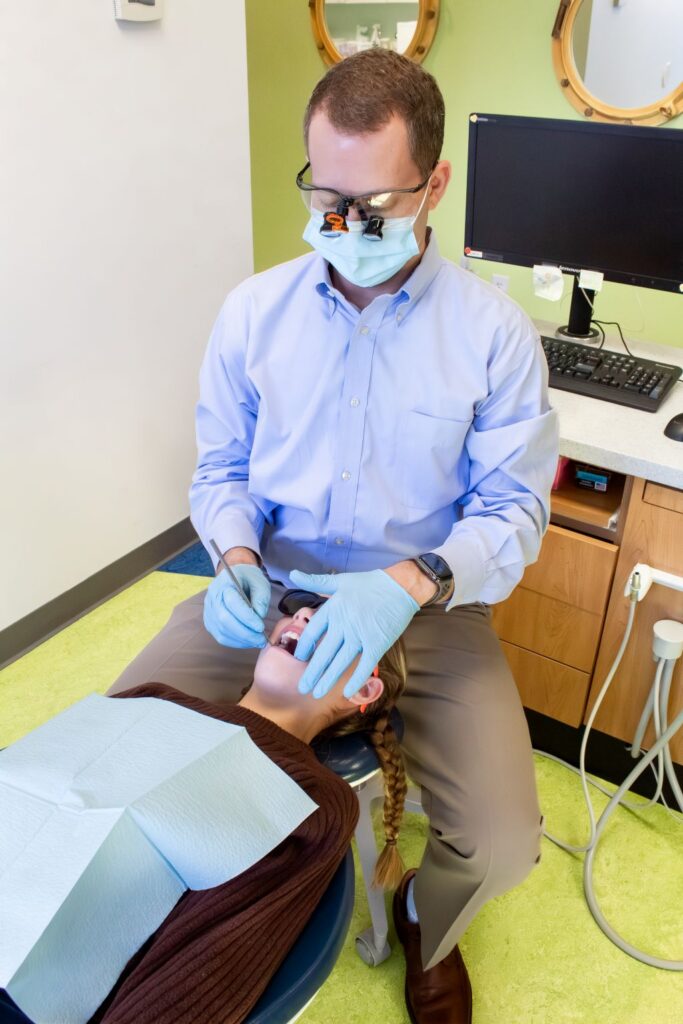
Pediatric Dentists are the Pediatricians of the dental world. Children are not miniature adults. Their bodies and teeth are different and so are their needs! Pediatric dentists go to specialty training for 2 years after dental school in order to learn how best to safely and effectively treat kids. The training includes topics like growth and development, cavity prevention, restorative care, space maintenance, pathology, behavior management, sedation training, dental emergency training and treatment of patients with special health care needs. With so much to learn, no wonder why additional specialty training is so critical!

Baby teeth aren’t just there for decoration (although they sure are cute!). They help children chew and speak and also facilitate normal jaw development. Additionally, baby teeth help guide permanent teeth into their proper positions.

All baby teeth are important, but the most important are the primary molars (back teeth). Primary molars are also some of the last teeth to fall out and are generally the ones that cause the most issues! So, it is very important to have them examined on a regular basis and to have any decay addressed in a timely manner.

To illustrate this, imagine a 4-year old has a cavity on a very back tooth. Will that tooth fall out? Sure, but not for about 8 years. If it’s just a small cavity, it can be fixed with a filling. If it’s bigger, it may need a crown. If it’s into the nerve, the tooth may need a pulpotomy (aka baby root canal) and crown. If the cavity is so extensive that the tooth can’t be saved, it will need to be extracted AND have a space maintainer placed so that the permanent tooth can come in properly. Each of those described procedures costs increasingly more down the line. So, by treating teeth in a timely manner you aren’t just preventing pain and infection, you’re usually saving money too!!

Brushing twice a day with a fluoride toothpaste and flossing daily are the textbook answers that most people know. And they are great! However, the most overlooked factor in cavity formation is diet. If your child is eating or drinking certain things often enough, they will experience decay regardless of how well or often they brush their teeth.

Dr. Rob’s biggest piece of advice as it pertains to diet is this: Once your child is weaned from breastmilk or formula, have them drink almost exclusively water. Plain water. Juice, soda, Gatorade, tea, lemonade, and pretty much everything else that isn’t water is bad for your teeth. Milk (in moderation), is the exception.

One of the greatest dental myths out there is that if you drink something that is sugar-free, it won’t cause a cavity. Nothing could be further from the truth. In fact, sugar itself doesn’t directly cause cavities. Sugar is a food source for bacteria in your mouth, some of which produce acid when they metabolize it. The ACID from the bacteria is what actually causes the tooth to break down, or demineralize, quicker than it can build up, or remineralize. So, if you eat or drink acidic things often enough, they absolutely can cause cavities, even if they’re low in sugar or sugar-free. If your child drinks something that is sugary AND acidic like orange juice or soda, it’s a double whammy! Try really hard to limit those drinks as much as possible! They wreak havoc!

How often teeth are exposed to sugar and acid matters a lot when it comes to cavity formation. Patients who snack often or sip on drinks for a prolonged period of time are at much higher risk of developing cavities than those who only eat three times a day and just drink water in between meals. We advise patients to try and limit snacking and to try and keep their snacks as low in sugar as possible. Drinking water after snacks or sugary drinks is also beneficial.

A child should be taken to the dentist for the first time when their first tooth comes in (usually around 6 or 7 months) or by the age of 1, whichever comes first. There are many reasons why these early visits are important. It allows the dentist to track the child’s growth and development and assess the health of the teeth and other oral tissues. It also helps the child get used to dental visits. Most children who come to our office every 6 months starting at an early age are very confident and happy for exams and cleanings by the time they’re about 3 or 4 years old. Additionally, the early visits help us educate parents about how best to care for their child’s teeth so that the common problems are prevented. An ounce of prevention is worth a pound of cure!

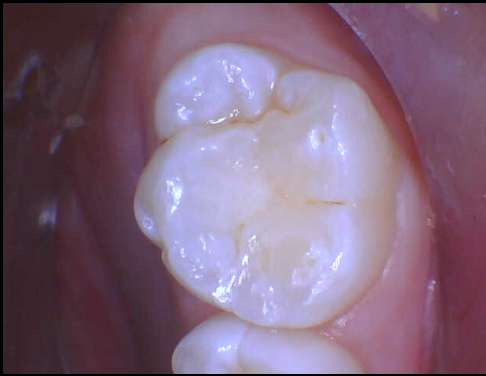
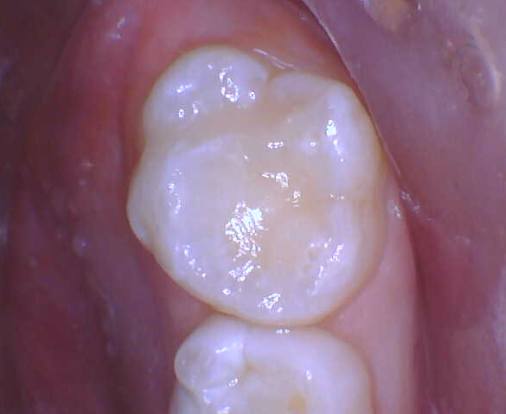
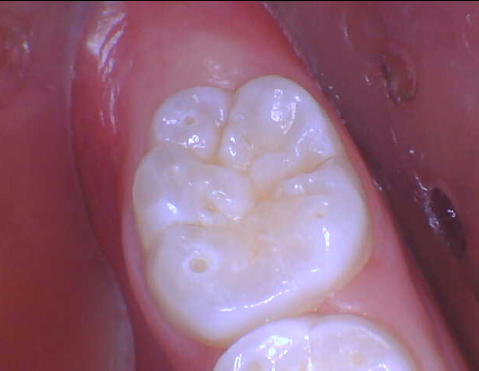
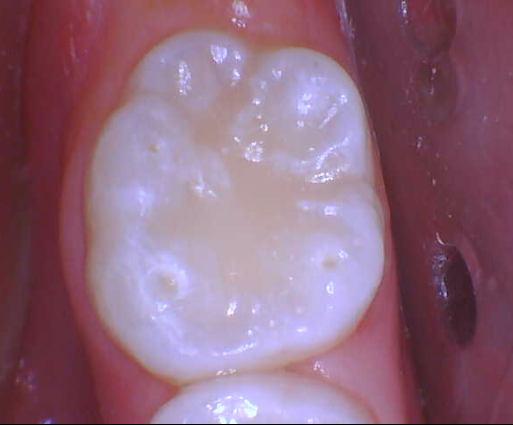
A sealant is a protective coating that is placed in the deep grooves and pits of permanent molars and sometimes premolars. These areas on the chewing surface of the tooth are where cavities most commonly occur in permanent teeth. A well-placed sealant is a fantastic way to prevent decay from occurring. Sealants are one of Dr. Rob’s favorite procedures!

We closely monitor the sealants we place to make sure they are holding up well and we touch them up as needed. This is one of the most valuable services we offer.

Sometimes we also place sealants on primary (baby) molars, but this is not routinely done.

It is important to note that even if a tooth has a perfect sealant on it, it can still develop a cavity, particularly on other parts of the tooth (i.e. the smooth surfaces that contact adjacent teeth). Good oral hygiene practices are essential for cavity prevention, even on teeth with sealants.

Before

After

Before

After